Gardening Regenerative Energy
An Integrated Systems Approach to Sustainable Technologies
Whole Earth’s 1974 publication, Energy Primer: Solar, Water, Wind, and BioFuels, provides an overview of sustainable energy technologies that aims to make them accessible to those outside specialized disciplines. This ambitious compendium of technical guides and reflections on alternative energy systems is notable not just for the content it presents, but also for the way in which its authors share knowledge: “rather than describe the nitty-gritty of ‘how-to-do-it’ (requiring more space than we’ve got),” the authors instead presented only “the information that has helped us to understand the principles, problems and designs involved.”1 Instead of telling the reader which technologies should be used, they painted a picture of how they worked, why they’re important, and how the reader could apply them in their own DIY setting.
In contemporary discourse around sustainable energy, however, this homebrewed approach paired with a whole systems outlook is scarcely seen. Energy Primer points us toward integrated modes of climate action that begin with knowledge exchange at the individual and community levels. The scope of the climate crisis makes taking sustainability-centric action daunting at times, but frameworks of local action, interdisciplinarity, and accessible knowledge sharing offer toolkits for enacting change through small-scale steps that have the potential to ripple up through the complexity of climate systems, slowly shifting them toward resilience and sustainability.2 Drawing from my own research practice focused on designing open-source microbial fuel cells, this introduction to cultivating energy gardens pairs a step-by-step guide to building your own microbial fuel cells with a broader consideration of what we might take from the Whole Earth model of local action as we navigate an intensifying climate crisis.
In addition to highlighting the legacy of Energy Primer and the Whole Earth Catalog, the knowledge shared and expanded upon in this essay aims to demystify sustainable energy technologies and present accessible steps we can take as individuals and through community-centric initiatives to help mitigate the impact of our technologies on the climate crisis. Perhaps more importantly, it seeks to illustrate that change can happen at a more intimate, local scale; by cultivating “soft” technologies—tools that are “alive, resilient, adaptive, maybe even lovable”—we can shift away from extraction and toward regeneration and symbiosis.3
Regenerative Technologies
Regenerative technologies are a subsection of energy harvesting technologies, which translate a specific source of (residual) energy into a usable form (e.g., solar panels capture UV radiation from the sun and store it in batteries). Energy harvesting technologies have the positive property of taking residual byproducts as inputs, covering fields such as kinetic and thermal energy, and can even tap into unconventional sources like radio frequencies. Regenerative technologies are unique for their cyclical process of growth, harvesting, and regrowth, a process not shared by all sustainable technologies (i.e., we can harvest residual gusts of wind, but can’t control their patterns and frequency). This process is absent in traditional fossil fuel-based energy sources, which consume rather than harvest their inputs (e.g., oil), chemically altering them during combustion into an unusable, emissive byproduct that harms the biosphere. This type of energy generation is known as extractive energy since it takes inputs from the earth without renewing or regrowing them.4 Even if we could regrow extractive energy—which would, of course, be counterproductive due to its harmful byproducts—fossil fuels are produced over millions of years of geological time.5
Digesters
To regrow the inputs to our energy generation cycle, we need energy systems that can intake residual byproducts—usually treated as waste—and output sustainable, regenerative power. Energy Primer introduces digesters (fig. 2) to complete the energy cycle. Digesters are methane-based technologies that metabolize, or ingest, waste byproducts and produce energy. Energy Primer outlines metabolism as a biological process involving a series of reactions between two kinds of anaerobic bacteria feeding on raw organic matter. Acid-producing bacteria break down the organic input materials (e.g., food waste) into simpler materials (mostly acetic acid), which are then converted into a predominantly methane-based gaseous mixture called biogas.6
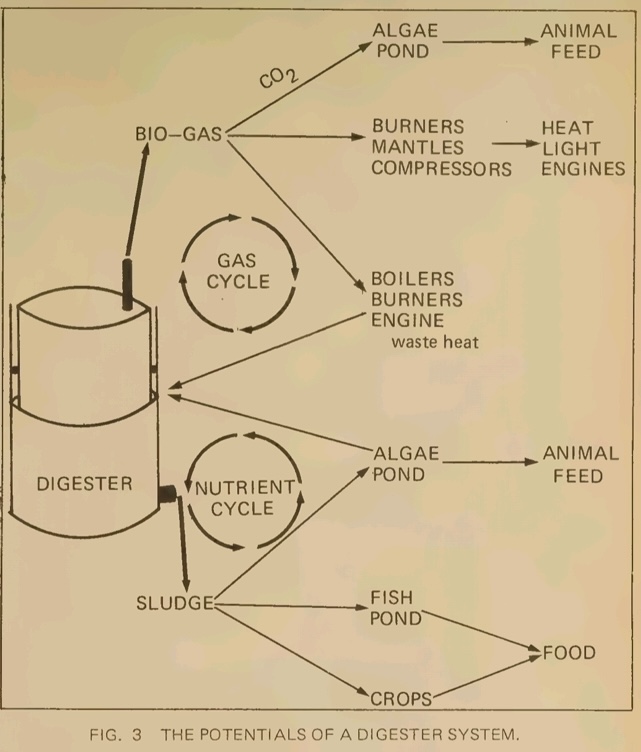
A successful digester depends on maintaining a balance between acid-producing and methane-producing bacteria.7 The process begins with an input, referred to as slurry or sludge depending on the added water content, mixed with community waste (e.g., food waste or manure). There are two types of digesters: batch-load digesters, which are sealed at the onset, then opened, emptied, and refilled when gas production stops; and continuous-load digesters, which are fed regularly in small increments so that gas and fertilizer are produced continuously. Each produces biogas, a mostly circular form of energy that can be burned as fuel. To be fully regenerative and circular, the output should feed back into the input. Continuous-load digesters are the closest to being circular, since they produce fertilizer as a byproduct which can be reapplied to crop fields to promote growth. However, biogas combustion produces byproducts which cannot be recaptured and reintegrated into the energy system. Regardless, biogas is still a product of the integrated systems philosophy of reclaiming residual energy outputs as new inputs, beginning from solar rays, translated via the photosynthesis of plants, and translated again via metabolic digestion: an energy cycle sparked by solar energy which would otherwise be lost.
Today, we’re aware of the negative effects of methane on global warming and often opt to avoid methane-based technologies where greenhouse gas-free alternatives exist, but there are certain applications where methane-based technologies are uniquely valuable and ecologically positive, such as certain well-planned remediation projects that utilize otherwise toxic communal waste products (i.e. landfills) and sites of natural anaerobic activity. Since scaling down digesters is difficult and the biogas they output can be harmful to the environment in excess, the potential applications currently available for methanogenic, metabolic energy harvesting are best suited for community-centric projects where interdisciplinary skill-sharing and co-creation allow for larger-scale facilities and integrated systems that are truly symbiotic.8 Resilience grows from locally mobilized projects that work especially well within, but are not exclusive to, urban centers.
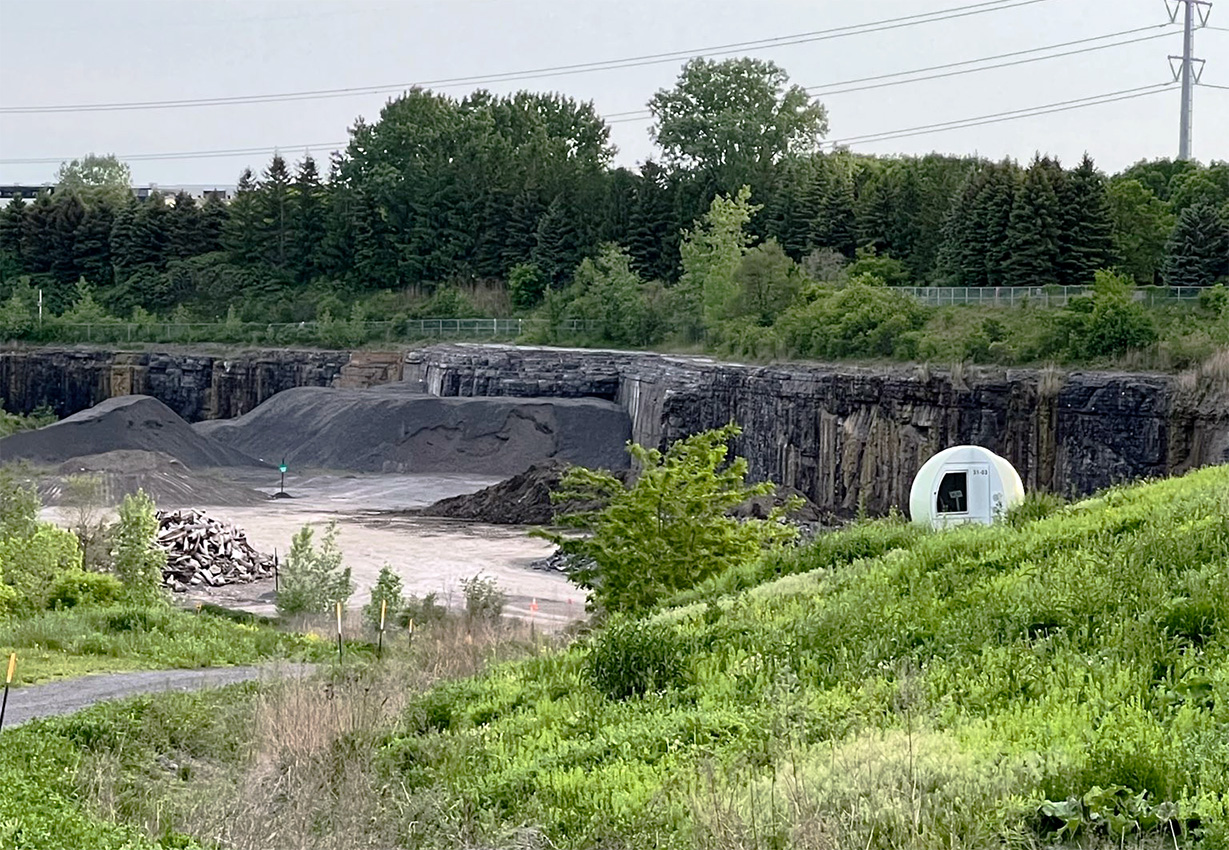
An excellent case study for how we might collectively integrate methanogenic technologies to best benefit city-scale environments is Frédéric-Back Park in Montréal, QC. Frédéric-Back is a reclaimed urban landfill turned hybrid communal green space and biogas facility. For decades it existed as a calcium quarry and landfill until a municipal transformation plan began rehabilitating the environment and developing a bio-recapture facility in the mid-1990s.9 The communal design provides public utility beyond its role in metabolic energy production. It produces biogas through a subsurface energy system that captures the byproducts of methanogenic metabolism and converts them into biogas. The biogas is then accessed through spherical hubs integrated into the park's landscape (fig. 2).
Microbial Fuel Cells
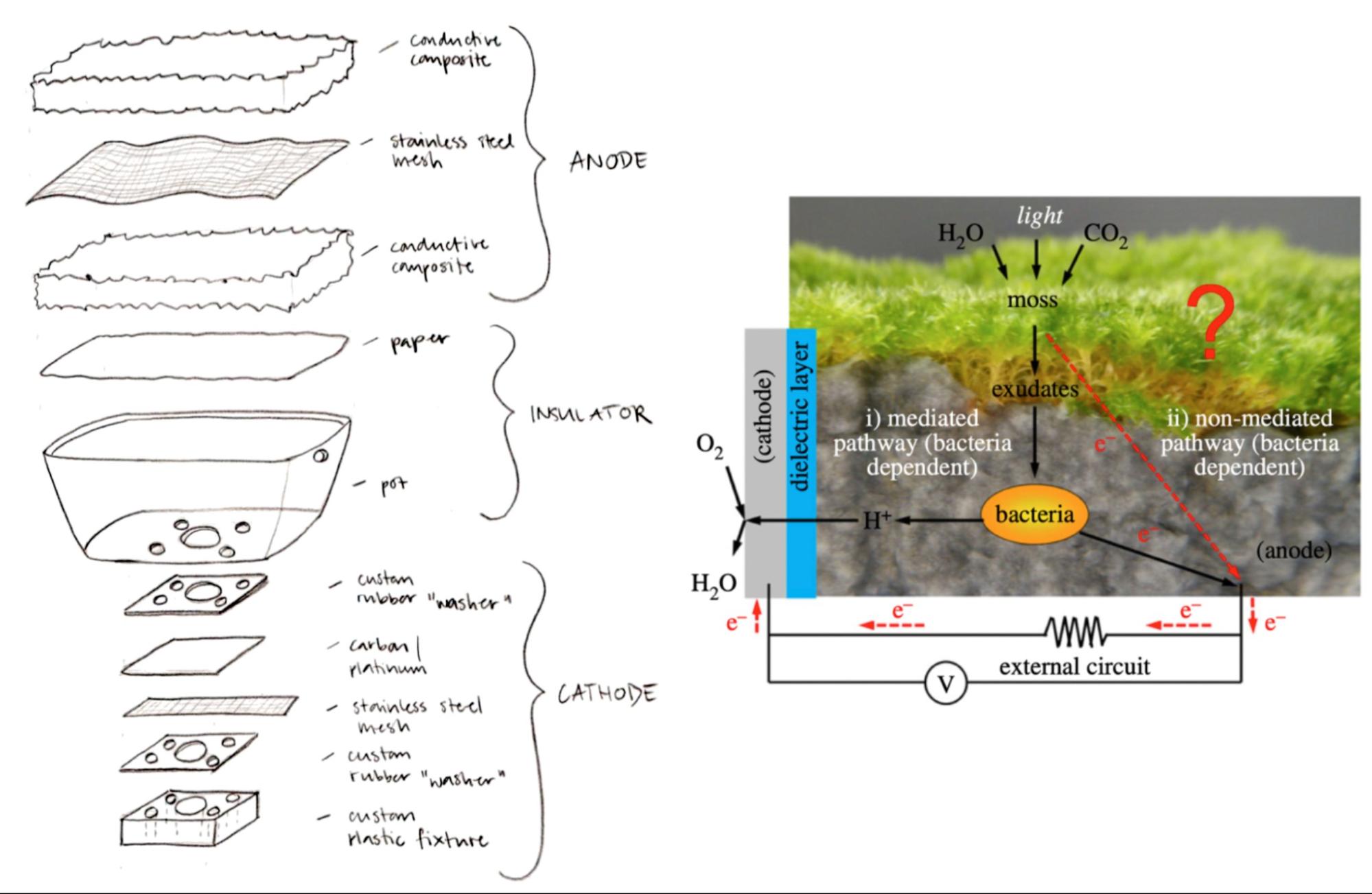
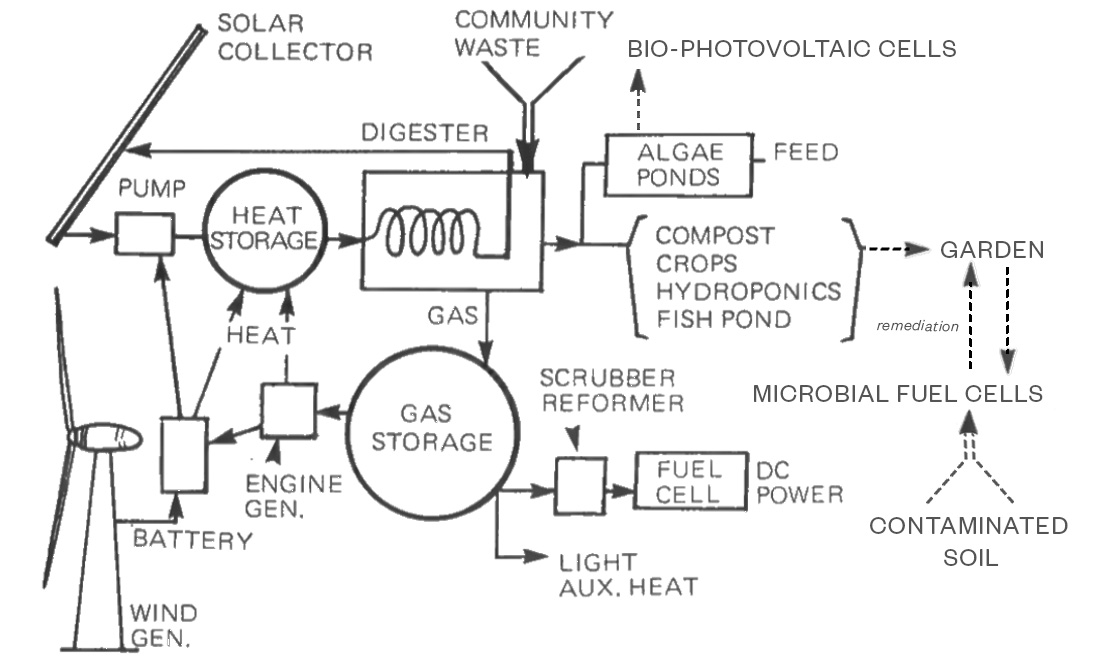
Today, a more recent metabolic energy technology builds on the legacy of digesters—microbial fuel cells. Microbial fuel cells (henceforth MFCs) are a type of regenerative technology integrated into soil—either in situ in natural environments or within DIY garden planters—that produce energy by collecting the residual byproducts of microbial metabolism and plant photosynthesis (via mycorrhizal microbes10) and spinning the collected ions into usable energy. This continual regeneration of source material makes MFCs an inherently regenerative technology—microbial communities grow and metabolize organic waste in the soil, generating residual ions through the metabolic oxidation reactions. Their cathode is exposed to air flow and uses the ions to convert oxygen to water (fig. 3), creating an electric potential in the process.11 The power generated by MFCs is simultaneously free from a reliance on external environmental processes (e.g., the wind speeds that rotate wind turbines) and, on a more intimate scale, intimately bound to its environment as the well-being of the MFC’s ecosystem dictates its rate of growth and survival. Like digesters, the regenerative nature of MFCs allows them to use “waste” materials from other technologies or human activity (e.g., agricultural waste). Therefore, MFCs are capable of both energy harvesting and remediation of input materials, removing contaminants and translating them into a biosafe form.12 To visualize this, I’ve updated Energy Primer’s integrated systems diagram (fig. 4) to demonstrate how outputs can feed back into the system that produced them, generating energy and remediating waste material.
Just as the biogas of Frédéric-Back integrates existing residual materials (i.e., landfill or biomass) and a methanogenic, metabolic energy process into their green urban system,13 MFCs offer an analogous process of remediation. The metabolic energy process utilized by MFCs is capable of remediating certain forms of polluted urban wastewater and contaminated soil involved in industrial spills and negligence. MFC researchers are investigating urban applications similar to Frédéric-Back that would use MFCs in waste and water treatment facilities. The required MFC design for this application hardly varies from those used in gardens. The electrodes of MFCs are placed within the waste byproduct and the bacteria begin metabolizing chemicals within the matter (e.g., recalcitrant compounds), ultimately resulting in either partially or fully remediated soils or bodies of water. Outside of large-scale urban applications, the remediative potential of MFCs can absolutely be done at home through DIY in situ designs such as the floating wetland remediative MFC design in Figure 5.
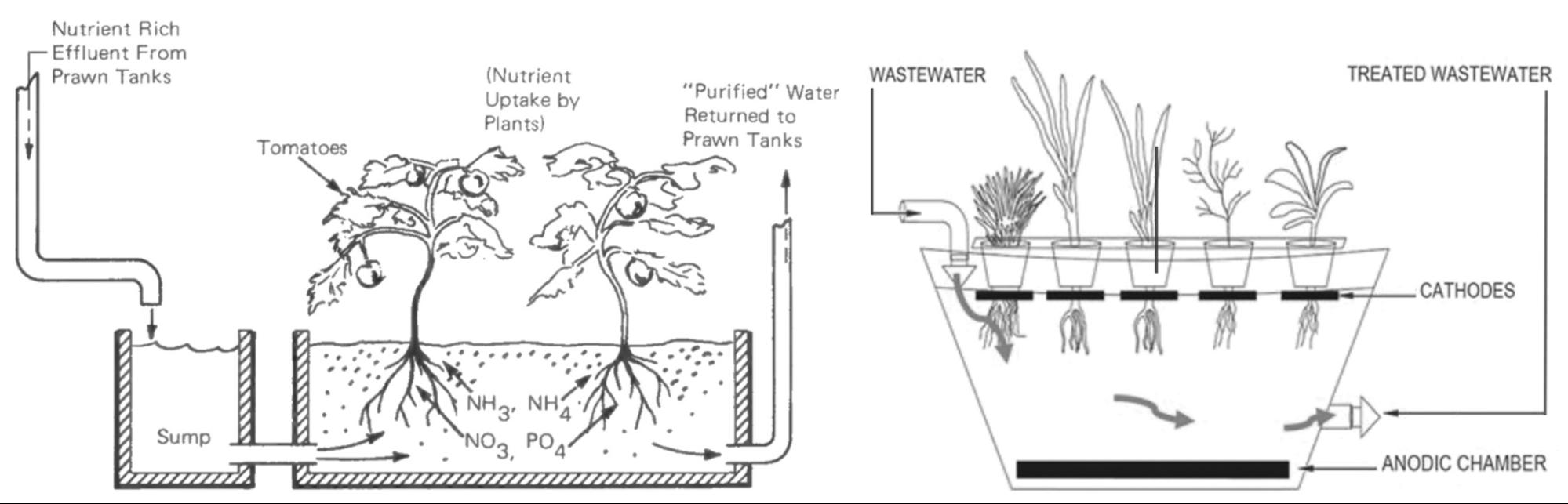
This ability to break down and recycle “waste” materials extends the regenerative potential of MFCs beyond their own cyclical potential. MFCs expand on the foundation laid by Energy Primer, serving as metabolic tools toward integrated systems and as scalable, accessible technologies that can be constructed more readily with the aid of modern digital fabrication technologies. Accessibility, scope, and system-centricity are especially crucial today to combat the growing, pervasive climate challenges we all face. Complex problems require holistic vantage points that can nurture growth, facilitate maintenance through local action, and interconnect skill sets rather than centralize high-tech engineering and individualistic solutionism.14
Microbial fuel cells (MFCs) offer an alternative paradigm by requiring us to design technologies that work in concert with natural systems rather than against them. Unlike conventional energy technologies which keep humans, technology, and nature separate, MFCs house an ecological mesocosm—an environment that becomes akin to a garden requiring ongoing symbiotic exchanges between human caretakers and microbial communities.15 The ionic energy harvested from MFCs can only exist within communal processes; it cannot be extracted or stored separately from the ecosystem that generates it. This inherent characteristic requires us to adapt our energy consumption to natural metabolic rhythms, creating conditions where technology must move in harmony with, rather than in opposition to, living systems, as is the case with deep-time extractive energy sources like fossil fuels.16 To turn away from deep-time sources, speculative energy futures may look to regenerative energies such as MFCs, which can live alongside human temporalities in long-lasting and mutually beneficial relationships.
A Systems-Centric Approach to Regenerative Energy
Before moving into outlining steps to crafting your own MFC, I’ll turn now to the systems-centric approach adopted by the authors of Energy Primer and how we might adapt it for our present moment. Each section of Energy Primer explores different regenerative technologies in depth while simultaneously describing how they might be combined with other energy-harvesting techniques. The book’s last chapter, titled “Integrated Systems,” describes regenerative energy not at the level of digesters, but in terms of a broader assembly of technologies—from this view, regenerative energy systems may far exceed the sum of their individual parts.
To keep that integrated system thriving, a symbiotic practice of care and maintenance is required; the technologies do not exist in isolation, they’re intricately entangled with us through social, political, and material ecologies.17 The metabolic component of Energy Primer best illustrates this entanglement and the importance of an integrated systems approach. In the spirit of Energy Primer’s authors, the updates and additions to metabolic technologies presented here require ecologies of care, maintenance, and more-than-human considerations that allow a sustainable and regenerative growing of energy. Making digesters accessible, the Primer’s contributors noted, requires a shared, interdisciplinary approach: “It’s hard to find people who are skilled or inspired in both disciplines of engineering and biology… of mechanical forces and life forces. This is why the building of a digester… requires a special integration and ‘bringing together’18 of varied talents, skills and people [through] organizing local efforts and designing for local needs.”19
While not every sustainable energy technology featured in Energy Primer is regenerative, the book illustrates how a systems-centric approach can minimize impacts, involve multiple actors, and promote circular, regenerative practices. Since metabolic regenerative energy systems operate on a scale much closer to “circular time”20 than deep time, the rate at which they produce energy can never compete with the immediacy we have come to expect from extractive sources. By using an integrated, hybrid approach, each technology can play off the strengths and weaknesses of others within the system, completing the cycle of energy inputs and outputs and offering a diverse range of energy sources while we collectively adjust our practices and reduce our reliance on extractive sources.21
In contrast to the status quo of “EOL” (end-of-life) digital technologies, “components in the design of regenerative prototypes can be substituted, eliminated or repurposed.”22 For instance, modern metabolic technologies are more efficient than digesters but have several downsides that integrated systems solve. Firstly, digesters require an abundance of input materials (e.g. crop waste, expanded on shortly) and take up a lot of space, both of which were not significant issues for the off-the-grid homesteads that existed when Energy Primer was released. Alternatively, MFCs are compact and can easily integrate into existing planters (e.g., on urban balcony gardens) which are well suited to the amount of space many readers will be more acclimated to today. Secondly, many energy harvesting devices are only possible thanks to strides in electrical engineering that can utilize “ultra-low power” sources, which are extremely impressive but still have some caveats. To enable ultra-low power circuits to harvest residual byproducts, they often have a “startup cost”23 to get the circuit running. Digesters don’t have a circuit that requires a startup cost, but they do require excess heat for maximum efficiency. Energy Primer describes this relation as “back-up components to an integrated system. Their biological requirements for heat mean that digesters can be fed by the excess energies of solar and wind devices while at the same time they can use their own waste products as fuel. Digesters are literally the guts of an integrated energy system.”24 For stand-alone technologies, these costs can be difficult to achieve without human intervention and an additional energy source; integrated systems compensate for this startup cost by recycling the excess energies of other components (fig. 4). Energy Primer covers an impressive range of sustainable technologies even by today’s standards, but what makes the publication particularly relevant today is how technologies are woven into a system. The following guide builds on Energy Primer’s ethos of systems thinking by illustrating how DIY MFCs can be networked to form a regenerative energy garden where the system fulfills its own startup cost.
Building Your Own Microbial Fuel Cell
The DIY MFC fabrication guide I created was motivated by the absence of a published set of accessible steps and the fragmented nature of the caveats that came with each new material I tested. The 3D files I released in tandem with this guide represent a final iteration of my design process but lack the context surrounding my design choices. The alternatives to these choices were often equal in merit but varied in application. Akin to the authors of Energy Primer, I simplify the DIY process here into six steps that illuminate the general road map toward making your own MFC with an emphasis on the questions one should be asking when deciding which type of MFC best fits their needs. I recommend readers explore these six steps alongside the full MFC fabrication guide, located at https://slow.technology, which provides much more context, step-by-step images, and important micro-steps.
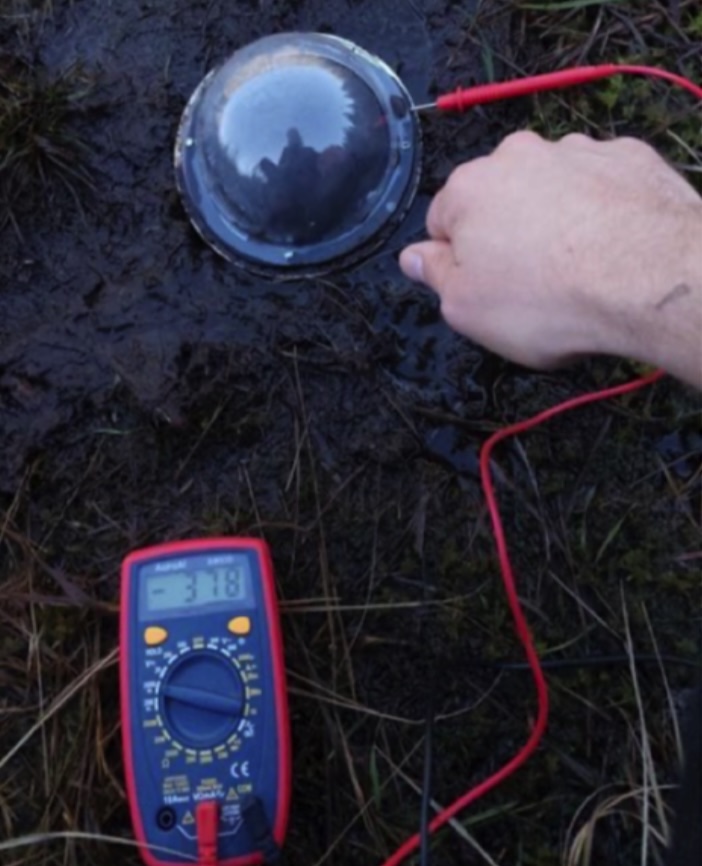
1. Determine which type of MFC best fits your application
There are four common MFC variants: anaerobic MFCs using swamp or bog mud as a medium;25 Bryo-MFCs using bryophytes (i.e., mosses) grown within special electrode “pulp”;26 Plant MFCs (P-MFCs), which use the soil surrounding plant roots as a medium through custom planters built with embedded electrodes;27 and wastewater MFCs, which reclaim waste byproducts (i.e. urban sewage or certain composts) for use as an ionic medium.28 Each has varied energy outputs—all of which fall in the ultra-low-power category—that are often linked to specific applications or environments (i.e., remediation of specific soil types, power output, growth rate, ease of care, etc.). In my experience, one’s curiosity is a good guide for selecting which medium to explore; there is no one-size-fits-all solution.
2. Create the body and fixture
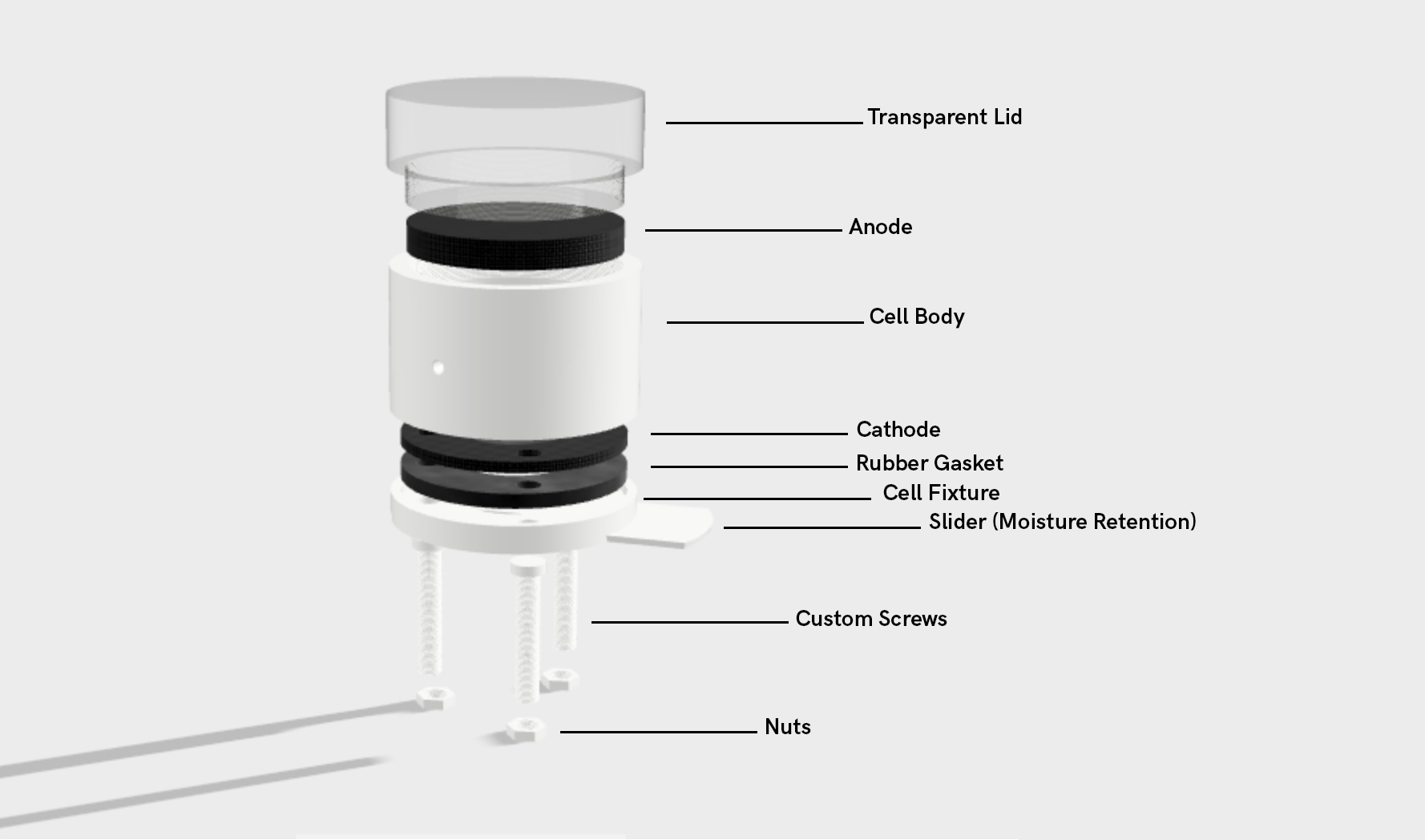
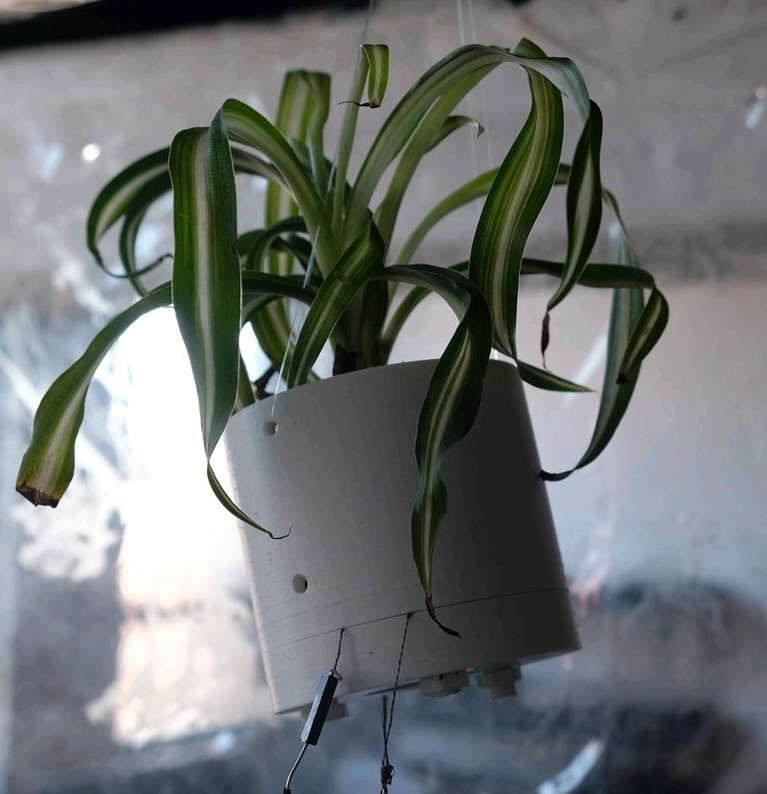
This step depends on the route chosen in Step 1, as the microbial medium has to be encased within the cell body. Wet mediums like anaerobic swamp sludge need a fully waterproof casing, planters need an open vertical clearing for the plant, and Bryo-MFCs are more sensitive to moisture loss (hence the inclusion of lids in my design). Throughout prototyping I explored countless material options for the cell body. Almost every attempt I made to form a cell out of readily available household components failed. As can be seen in Figure 7, MFC bodies require only two main parts: a cell body and a cell fixture that sandwich electrodes as tightly as possible through screws and nuts. Since MFCs deal with incredibly sensitive electronics, any gap in this design will lead to an exponentially less effective power output as air escapes rather than passes through them. If you have access to a 3D printer or a local makerspace, you can 3D print every component of the casing directly using the STLs I provide in my designs. I have bryo-based and plant-based models available (fig. 7 and 8, respectively), both of which are fully open-source and can be modified to suit your own needs and experiments.
3. Make the electrodes
The ionic energy gathered by MFCs requires two electrodes, an anode (negative) and a cathode (positive), where the cathode must be exposed to the atmosphere. This exposure facilitates the oxygen reduction reaction at the cathode, where oxygen from the atmosphere combines with protons (hydrogen ions) and electrons to form water. Meanwhile, at the anode buried in the soil medium, microbes oxidize organic matter, releasing electrons that flow through the external circuit to the cathode, creating an electric potential that can be harvested and stored. The electrodes are traditionally made up of activated carbon in the form of paper, felt, or pulp for three reasons. One, activated carbon has the potential to be arranged in a way that conducts electricity; two, carbon is non-toxic for organic life, meaning microbes can comfortably live on carbon scaffolds; and three, most of these forms of carbon have a high degree of microscopic porosity (fig. 9), and subsequently a large surface area for microbial biofilm growth, and for the surface uptake of ions on the carbon. Lab-grade versions of these carbon materials are often coated in a thin layer of platinum, which enzymatically increases the uptake and electric potential of the carbon. The downside to this is most of the sources for carbon electrodes are likely only open to institutional labs, or if not, are quite expensive for the average maker.
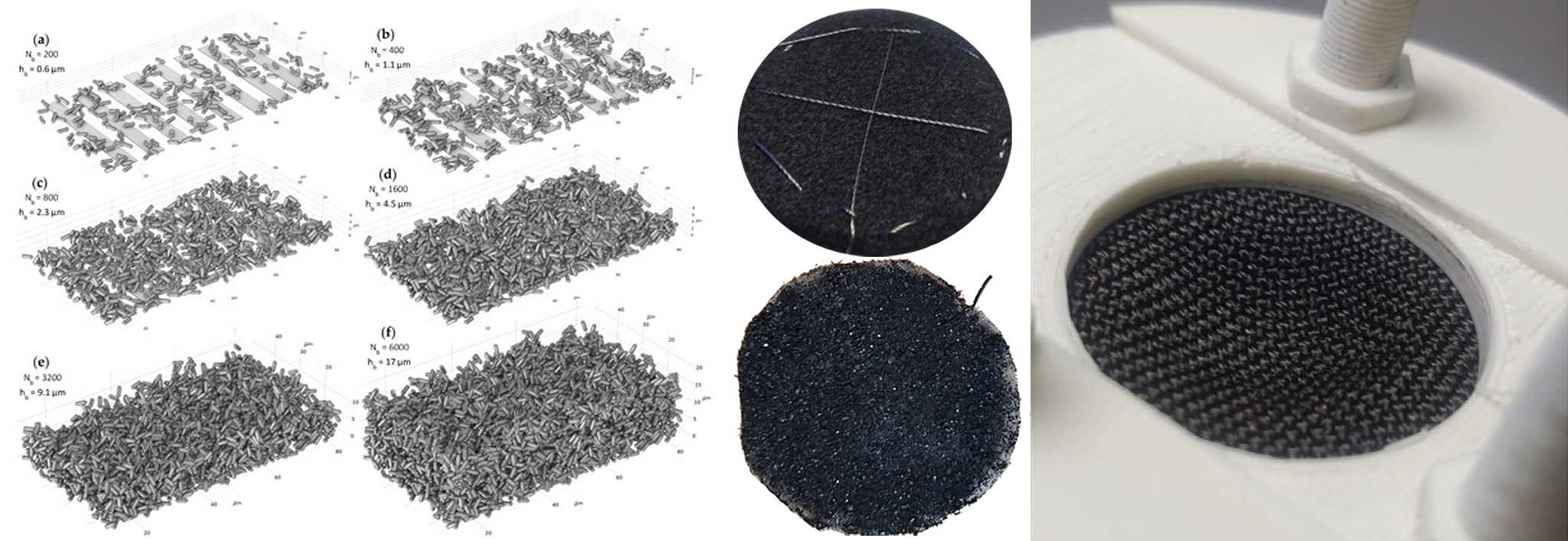
The most efficient electrodes are carbon-based felts, graphene, and platinum coated carbon cloth. These materials need to be purchased from a specialty store and can be quite expensive. For a more DIY approach one can make electrodes out of stainless-steel mesh and activated charcoal. Activated charcoal comes in many forms, or allotropes; some are more electrically conductive than others. The carbon provides a bioactive surface, acting like an electron sponge, while the steel provides a rigid, conductive pathway for the ions to travel to the power circuit. Microbes won’t grow on stainless steel, so we need to cover the mesh with porous activated charcoal. Any activated carbon charcoal (often sold at pet stores for aquariums) will suffice, but the finer the granules, the more surface area for the biofilm. An easy way to convert larger pellets is with a mortar and pestle or a hydraulic pump that crushes the carbon—the latter is magnitudes more efficient if you have access to one.
4. Make the gasket and assemble the cell
The gasket can be made out of a variety of flexible materials such as cork, rubber, or neoprene. It needs to sit between the cell body and fixture, allowing the screws to pass through to assemble the cell. As it becomes compressed, the gasket seals the electrodes from the ambient atmosphere, forcing air flow to occur through the designated pathways to the cathode for the oxygen reduction reaction. An optional proton exchange membrane (PEM) also helps facilitate this process. PEMs allow air to pass through and react with extremely minute losses in airflow, forcing gases through a small aperture dictated by the holes at the bottom of the body and the washer. I rarely used PEMs due to their price and inaccessibility, but they do make a significant difference in efficiency. My suggestion would be to iteratively build your MFCs and when you have one that works for your application, start looking into swapping the common parts I suggest here with “lab-grade” ones. You can get around this efficiency leak by chaining MFCs together in a series, like adding extra batteries to your device. Once the gasket is made, you can assemble your MFC by arranging the components as seen in Figure 7, ensuring any wires you've attached to the electrodes are not touching and can be accessed from outside the cell body.
5. Make the PMC and connect the electrodes
To actually harvest an MFC’s energy, you need to build a PMC (Power Management Circuit). This is perhaps the trickiest part to fabricating an MFC. The average anaerobic MFC typically produces around 300mV and 2mA in a lab setting, nearly ten times less energy than standard digital electronics require (3.3V). If one replicates these tests outside a specialized lab, you would receive around 100mV and 1mA. To harvest microbial energy several components are required: a 1:100 transformer,29 a DC/DC step-up converter, an array of capacitors, and a supercapacitor, all of which must be ultra-low energy models. I use an LTC3108-1 to make my PMCs (see Figure 10 for my circuit configuration), which I would recommend starting with before experimenting with other components. Due to the difficulty of this final, important step, I would recommend using a multimeter to check your MFC’s output beforehand. This will let you know if your MFC is set up correctly, even if your PMC isn’t.
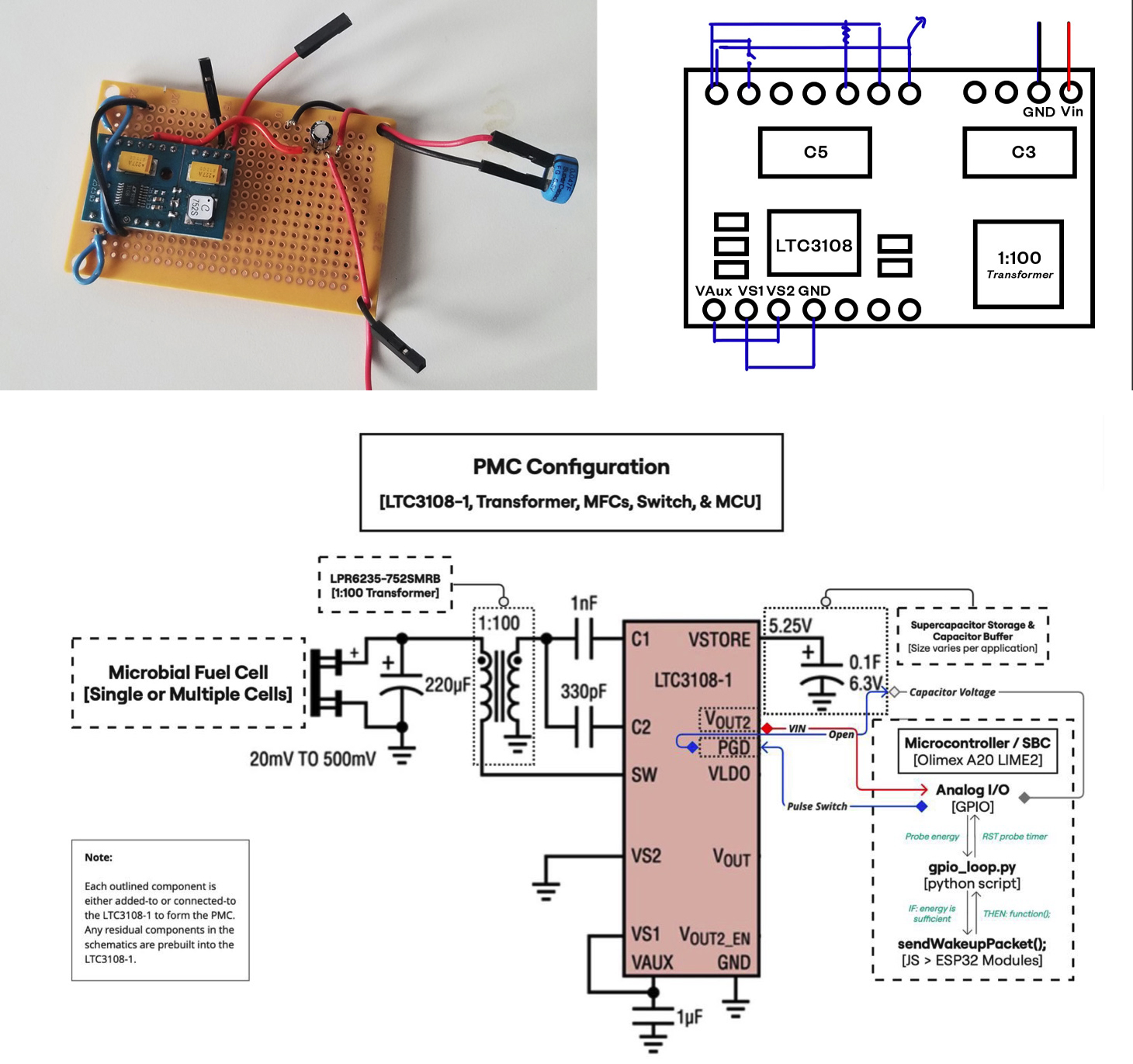
Once setup, connect your electrodes to the VIN and GND and a red test LED at VOUT2 to check if a light slowly fades in over the next few minutes (depending on the capacitor size, which must fill first). An easy pitfall for those unfamiliar with DIY circuits is mistaking the voltage output for the total power. Regardless of the device’s voltage, PMCs require an amperage threshold to be met to “start up” and maintain the energy harvesting process. DIY fuel cells struggle with amperage due to a mixture of the electrodes’ conductive potential (i.e., lab grade vs. DIY), the atmospheric seal, and the proximity of the two electrodes. To find a DIY-friendly solution to this problem we return to the notion of energy gardening. By chaining together a series of MFCs (e.g., an MFC planter with multiple cells), one can direct their combined energy into a single PMC, adding cells if needed, until their amperage is sufficient to sustain the PMC.
6. Optionally connect multiple cells and let them grow
MFCs have the potential to work together in a garden-like configuration, countering eco-destructive practices and instead replanting and reseeding soil. This integration of metabolic components and systems-centric reconfigurations of today’s clean energy technologies allow us to sustainably “grow, build, and maintain”30 our energy needs through what we might call energy gardens. Gardens comprise a network of more-than-human actors which cannot be reduced to a single component. Gardens are relational: their soil is an energetic microcosm of “microbes—algae, fungi, and bacteria [that] make up the bulk of living matter and form the [ecological] energy foundation.”31 As your MFCs’ microbial communities become more abundant, so too will your power.
The notion of gardening implies a sense of continuity; to thrive and provide continuous harvest, gardens need ongoing care, maintenance, and patience.32 By forming a symbiotic relationship with the garden one must listen to its needs, not solely ask of it. When one truly listens to what it is asking of you, one can start to better understand the embodied, aesthetic qualities of the relationship which may lead to two realizations. Firstly, maintenance necessitates relating to the garden as a system—soil, sun, water, microbes, insects, etc. Maintaining a garden involves, per media scholar Shannon Mattern, “drawing connections among different disciplines... [it] is an act of repair or, simply, of taking care—connecting threads, mending holes, amplifying quiet voices.”33 The second is that individuals must learn to listen and engage in what Donna Haraway describes as a “more expansive environmental politics that account for relations, and that tune in to the world-making projects of other organisms.”34 Within spaces of eco-collaboration, it is hard to ignore the collective responsibilities and difficult to know where relations start and the individual ends. A garden symbolizes the connection between humans and non-human organisms, requiring symbiosis to flourish; it is a space of “making-together.”35 Embodying a new arrangement of energy gardening, MFCs echo how Energy Primer’s authors connect gardening, accessible tools, and metabolic energy.
The design and fabrication of MFCs not only offer practical applications; the act of embodied making and gardening mediate our ecological relations with technology, energy, and the environment. Metabolic energy gardens may even hold the potential to shift “trajectories of productive futurity in technoscience”36 toward slower, regenerative, and ecosophic future imaginaries—imaginaries that understand how the social design of technologies feedback into environmental systems,37 how to adjust our embodied understanding of energy and technology temporalities, how “to work with the soil, the water, and plants, learning about more-than-human working patterns and how to foster abundance, envisioning that we might actually change something, one garden at a time.”38
- Energy Primer: Solar, Water, Wind, and Biofuels (Menlo Park, CA: Portola Institute, 1974), 106. [↩]
- Arturo Escobar, Designs for the Pluriverse: Radical Interdependence, Autonomy, and the Making of Worlds (Durham: Duke University Press, 2018); Richard Buchanan, “Wicked Problems in Design Thinking,” Design Issues 8, no. 2 (1992): 5. Escobar defines this mode of research mobilization as Transition Design, a bottom-up approach to addressing complex problems through local community action and replicable solutions that scale organically. By providing access to tools, communal use-cases drive their adoption and redissemination. [↩]
- Soft-Tech, ed. Stewart Brand and J. Baldwin (San Francisco: Point Books, 1978), 51. [↩]
- Jussi Parikka, A Geology of Media (Minneapolis: University of Minnesota Press, 2015); Taffel 2021; Nixon 2013. [↩]
- This geological “deep time” (Daggett, 2019) chronology results in the vast amounts of energy (and CO2) stored and released by them when combusted, resulting in quantities - which our modern energy systems have become reliant on - out of sync with the natural chronologies of energy growth, capture, and flow in ecosystems. [↩]
- Energy Primer, 142. Biogas is about 70% methane (CH₄) and 29% carbon dioxide (CO₂) with insignificant traces of oxygen and sulfurated hydrogen (H₂S) which gives the gas a distinct odor. [↩]
- Energy Primer, 142. [↩]
- The individual applications of biogas energy were equally limited when Energy Primer was published. The authors suggest municipal or community scale projects such as centralized waste treatment facilities (p. 143). [↩]
- Ville de Montréal, Parc Frédéric-Back: A Unique Metamorphosis (2017), accessed August 1, 2025, https://montreal.ca/en/articles/parc-frederic-back-unique-metamorphosis-18997. [↩]
- Mycorrhizal microbes are symbiotic fungi that have symbiotic partnerships with plant roots which extend thread-like networks through the soil, expanding the microbes’ reach and allowing them to break down nutrients that the plants' are unable to digest—in exchange, the plants provide the microbes with sugars created through photosynthesis (Simard, 2021). [↩]
- Paulo Bombelli, et al., “Electrical Output of Bryophyte Microbial Fuel Cell Systems Is Sufficient to Power a Radio or an Environmental Sensor,” R. Soc. Open Sci. 3, no. 10 (October 26, 2016): 160249, https://doi.org/10.1098/rsos.160249 [↩]
- Carlos Munoz-Cupa et. al, “An Overview of Microbial Fuel Cell Usage in Wastewater Treatment, Resource Recovery and Energy Production,” Science of the Total Environment 754 (2021): 142429, https://doi.org/10.1016/j.scitotenv.2020.142429 One established example is the potential for microbial technologies to remediate contaminated soil (e.g., soil saturated with pollutants from an oil spill) by metabolizing harmful compounds such as excess hydrocarbons, leaving the soil safe to re-integrate back into ecosystems. [↩]
- Martin Héroux and Diane Martin, “Frederic-Back Park, Montreal, Canada: How 40 Million Tonnes of Solid Waste Support a Public Park,” Detritus: Multidisciplinary Journal for Waste Resources and Residues 11 (2020): 68–80, https://doi.org/10.31025/2611-4135/2020.13972. [↩]
- Escobar, “Designs for the Pluriverse”; Garnet Hertz and Matt Ratto, “Critical Making and Interdisciplinary Learning,” in The Critical Makers Reader, ed. Bogers & Chiappini (Amsterdam: Institute of Network Cultures, 2019); Julian Oliver, Gordan Savičić, and Danja Vasiliev, “The Critical Engineering Manifesto,” 2011, https://criticalengineering.org/ [↩]
- Eugene P. Odum, “The Mesocosm,” BioScience 34, no. 9 (1984): 558–562, https://doi.org/10.2307/1309598. [↩]
- Parikka, A Geology of Media. [↩]
- Gregory Bateson, Steps to an Ecology of Mind: Collected Essays in Anthropology, Psychiatry, Evolution and Epistemology (St Albans: Granada, 1973); Félix Guattari, The Three Ecologies, foreword by Paul Sutton (London: Bloomsbury Academic, 2014). [↩]
- The way in which the authors situate the phrase bringing-together is reminiscent of the term Sympoiesis—defined by Haraway as “making-with” (2016) and requiring a “bringing-together” of components for the “making” [of energy] through symbiotic, living relations (Dempster, 1998). [↩]
- Energy Primer, 106. [↩]
- Laurie Cluitmans et. al, On the Necessity of Gardening: An ABC of Art, Botany and Cultivation (Amsterdam: Valiz, 2021). A term used by Laurie Cluitmans to convey a temporarily rooted in cyclical process of growth, harvest, and regrowth. Cluitmans establishes circular time as an embodied awareness of more-than-human lifecycles tacitly communicated through cycles of care and maintenance while gardening. [↩]
- Energy Primer, 3. [↩]
- Eric Snodgrass, et al., “Windternet: Designing Grid-Liberated Servers for Regenerative Energy Communities,” in LIMITS 2024: Tenth Workshop on Computing within Limits, June 18–19, 2024. [↩]
- Kris De Decker, Marie Otsuka, and Roel Roscam Abbing, “How to Build a Low-Tech Website?” Low-Tech Magazine, 2018; Alfredo Costilla-Reyes et al., “A Time-Interleave-Based Power Management System with Maximum Power Extraction and Health Protection Algorithm for Multiple Microbial Fuel Cells for Internet of Things Smart Nodes,” Applied Sciences 8, no. 12 (2018): 2404, https://doi.org/10.3390/app8122404 [↩]
- Energy Primer, 144. [↩]
- K. Wetser, Electricity from Wetlands: Technology Assessment of the Tubular Plant Microbial Fuel Cell with an Integrated Biocathode (Thesis, 2016); Bruce Logan, Microbial Fuel Cells (2007). [↩]
- Bombelli et al., “Electrical Output of Bryophyte Microbial Fuel Cell Systems Is Sufficient to Power a Radio or an Environmental Sensor”; Fan Yang et al., “Study of Transformer-Based Power Management System and Its Performance Optimization for Microbial Fuel Cells,” Journal of Power Sources 205 (2012): 86–92. [↩]
- Andrea Schievano et al., “Floating Microbial Fuel Cells as Energy Harvesters for Signal Transmission from Natural Water Bodies,” Journal of Power Sources 340 (2017): 80–88; Keegan G. Cooke, et al., “BackyardNetTM: Distributed Sensor Network Powered by Terrestrial Microbial Fuel Cell Technology,” in Unattended Ground, Sea, and Air Sensor Technologies and Applications XII (2010). [↩]
- Wen-Wei Li, Han-Qing Yu, and Zhen He, “Towards Sustainable Wastewater Treatment by Using Microbial Fuel Cells-Centered Technologies,” Energy & Environmental Science 7, no. 3 (2013): 911–924; Carlos Munoz-Cupa et. al, “An Overview of Microbial Fuel Cell Usage in Wastewater Treatment, Resource Recovery and Energy Production.” [↩]
- The LTC3108-1 varies from the LTC3108 through the inclusion of a preconnected circuit between the main board and a pad for the PMC’s transformer. The boards come without transformers to widen the potential energy harvesting applications (i.e., a 1:20 transformer will have different applications from a 1:100). [↩]
- Energy Primer, 2. [↩]
- “Soil Fundamentals,” CoEvolution Quarterly, 119. [↩]
- Shannon Mattern, “Maintenance and Care,” Places Journal, November 20, 2018. [↩]
- Jennifer Gabrys, “Sensing Lichens,” Third Text 32, nos. 2–3 (2018): 350–367. [↩]
- Donna Haraway, “Staying with the Trouble: Anthropocene, Capitalocene, Chthulucene,” in Anthropocene or Capitalocene? Nature, History, and the Crisis of Capitalism, ed. J. Moore (San Francisco, CA: PM Press, 2016), 34–76. [↩]
- M. Beth L. Dempster, “A Self-Organizing Systems Perspective on Planning for Sustainability” (master’s thesis in environmental studies, University of Waterloo, 1998); Haraway, “Staying with the Trouble.” [↩]
- Puig de la Bellacasa, “Soil Times,” 200. [↩]
- Escobar, Designs for the Pluriverse; Bateson, Steps to an Ecology of Mind. [↩]
- Puig de la Bellacasa, “Soil Times,” 158. [↩]
Matthew Halpenny is an interdisciplinary artist and researcher from Montréal who works between the milieus of biology, art, and technology. Their most recent project, Gardening the Cybernetic Meadow (2024), explores microbial fuel cells (MFCs) as temporal aesthetic mediums while simultaneously working towards improving their accessibility as open-source regenerative energy technologies.